
Where Is the Best Place to See the Northern Lights in Minnesota?
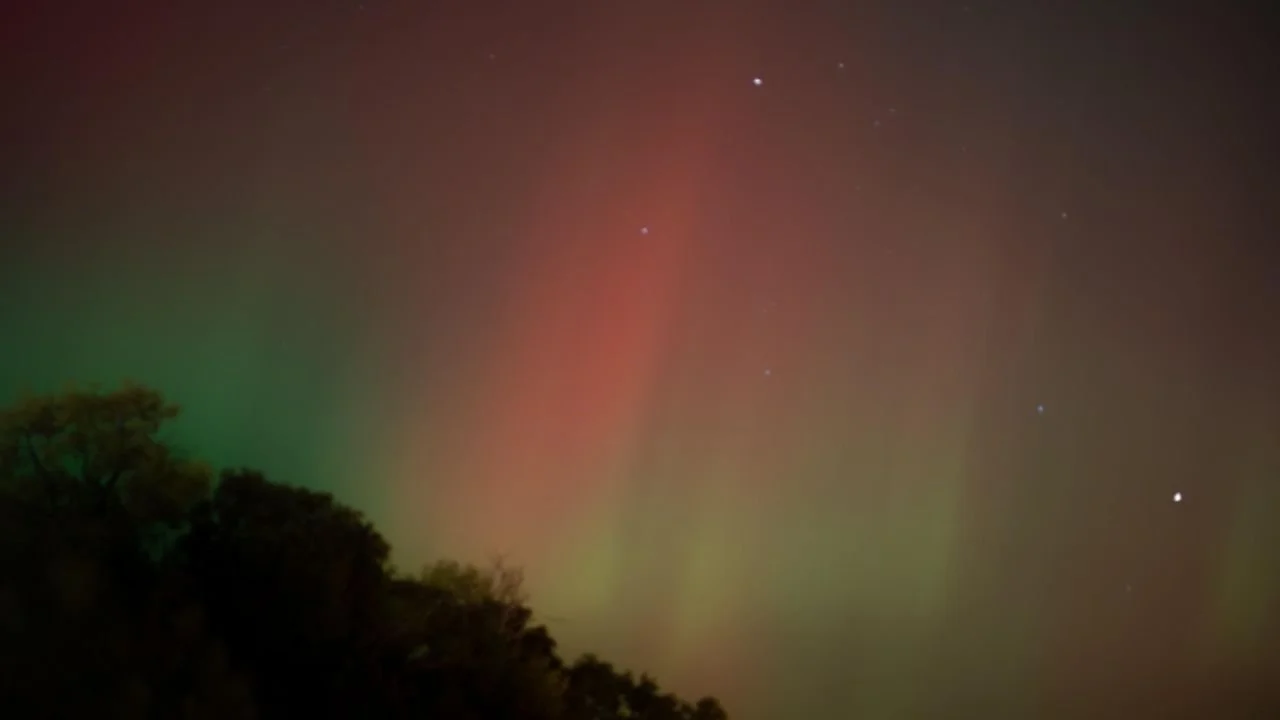
There's a moment every aurora chaser knows. You're standing in the cold, neck tilted back, waiting. Then the sky shifts. A faint green glow builds along the horizon. It stretches, brightens, and starts to move. Minnesota gives you that moment more often than other places. With its dark rural skies and northern latitude, this state is one of the best places in the country to see the aurora borealis.
Why Do the Northern Lights Appear?
The aurora borealis has a real, physical explanation. It starts in the sun, not in the sky.
The sun constantly releases charged particles into space. This stream is called the solar wind. When it reaches Earth, our planet's magnetic field pulls those particles toward the poles. As they collide with gases high in the atmosphere, they release light. That light is the aurora.
Different gases create different colors. Oxygen tends to glow green. At higher altitudes, it can glow red. Nitrogen adds blue and purple tones to the mix. That's why some displays look like a single green ribbon, and others burst into layered color.
Minnesota has one advantage. It is its lakes. Water reflects the sky, doubling the effect of any display overhead. There are over 10,000 lakes across the state, with a heavy concentration of them in the north. This allows Minnesota to offer countless natural mirrors for the aurora. Standing on the south shore of an inland lake gives you an open view north, which is exactly where the lights tend to appear.
Where Is the Best Place in Minnesota To See the Northern Lights?
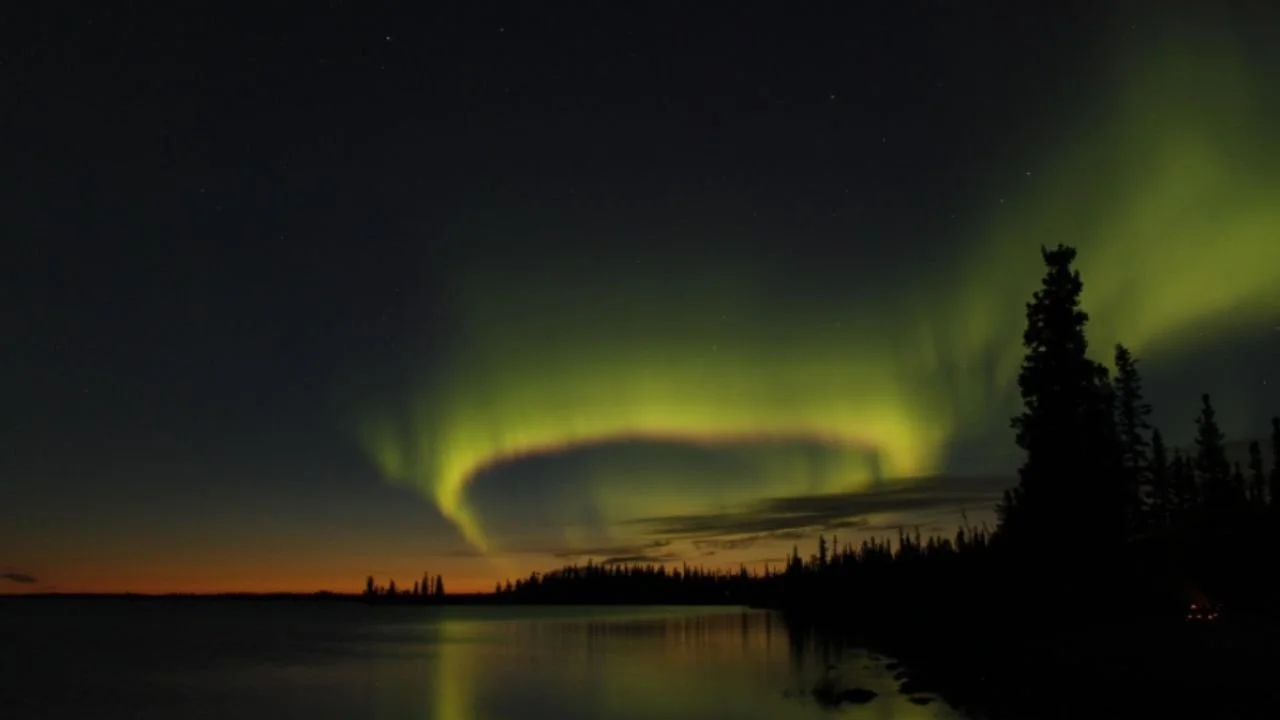
Here are the top spots across the state.
The Boundary Waters Canoe Area Wilderness (BWCAW)
The BWCAW is a certified International Dark Sky Sanctuary. It spans over a million acres along the Minnesota-Canada border, with more than 1,100 lakes inside its borders. There's almost no artificial light for miles. That makes it one of the darkest places in the entire country, and also a reliable spot for a good aurora show. Guests don't need to paddle deep into the wilderness to benefit. Even the edge of the BWCA offers sky conditions that most travelers never experience at home.
The Gunflint Trail
This scenic route runs through remote forest near the Canadian border. Elevated points along the trail open up wide, panoramic views. It's a favorite for photographers chasing wide-sky shots of the aurora.
Voyageurs National Park
Voyageurs holds its own dark sky certification. More than a third of the park is water, which means wide, unobstructed views over the lakes. Rangers here even lead night sky programs during peak viewing months.
Lake of the Woods and the Northwest Angle
This region is at the very top of Minnesota. The Northwest Angle is actually the northernmost point in the continental United States. Being that far north gives you a real edge when the aurora oval expands during active nights.
Ely, Minnesota
Ely sits right on the edge of the Boundary Waters. It is surrounded by forest and water instead of streetlights. It's remote enough to offer genuinely dark skies, but developed enough to give visitors somewhere comfortable to stay. Many of the darkest places in Minnesota require a long drive with no cabin, no bed, and no bathroom in sight. Ely gives you both the dark sky and a warm place to return to.
This place is Timber Trail Lodge. It sits on Farm Lake, part of a four-lake chain with direct access to the BWCA. Guests staying here are already positioned on the south shore of an inland lake, facing north. Local aurora photographers consider it one of the best natural setups for a viewing. After a day on the water or the trail, guests can walk down to the dock, look north over Farm Lake, and wait for the sky to shift. No long drive required. No tent required, either, unless you want one.
How Long Do the Northern Lights Last?
The aurora doesn't behave like a light switch. It behaves more like weather, with quiet stretches and sudden bursts. Displays tend to arrive in waves, called substorms. A faint arc might sit quietly on the horizon for a while. Then, without much warning, it brightens and starts to dance across the sky. That active burst usually lasts 10 to 30 minutes before fading again. A single night can bring several of these waves, spaced out over hours.
Because of this pattern, a quick five-minute look outside often isn't enough. Many visitors give up right before the best part of the show begins. If you're serious about seeing the aurora, plan to stay outside for two to four hours. Bring warm layers and something hot to drink.
On a strong night, the aurora can appear on and off from dusk until dawn. On a quiet night, you might only catch one brief flare. Either way, the lights rarely stay still once they start moving.
Why Is 2026 the Best Year to See the Northern Lights?
Solar activity runs in an 11-year cycle. The most recent peak, known as solar maximum, happened in October 2024. You might assume that means the show is already over. It isn't.
It has been seen in the past that years right after solar maximum often produce some of the strongest displays of the entire cycle. Solar physicists have tracked this pattern before. During the last solar cycle, activity peaked in 2001. Yet some of the most extreme geomagnetic storms on record hit in 2003, two years later.
That's the window Minnesota is in right now. The sun is still releasing strong solar flares and coronal mass ejections, both of which drive bigger, brighter auroras. These storms can push the aurora oval further south than usual. This is exactly what benefits a state like Minnesota. During major geomagnetic storms, the lights have been spotted as far south as Illinois and Oregon.
None of this guarantees a display on any single night. Space weather is unpredictable by nature. But 2026 stacks the odds in your favor more than a typical year would. If you've been waiting for a reason to plan an aurora trip, this is it.
What Is the Best Time of the Year to See Northern Lights in Minnesota?
Darkness is the one thing you truly need. Everything else is a bonus.
Fall and winter give Minnesota its longest, darkest nights. That's why these seasons are the most popular for aurora trips. Early sunsets mean more hours of viewing time, even on a weeknight. That said, no single season holds a monopoly on aurora activity. Displays have been recorded in every month of the year, as long as the sky is dark and clear.
Late September and March deserve special mention. Around the equinoxes, Earth's magnetic field lines up more favorably with the solar wind. This alignment tends to trigger stronger geomagnetic activity than you'd see in the dead of winter. Want strong odds without the deepest cold? These shoulder months are worth targeting.
For time of night, aim for the hours between 10 p.m. and 2 a.m. This window centers on local midnight. This is when Earth's rotation puts you in the most active part of the aurora's path. It's also worth checking the moon phase before you book. A new moon gives you the darkest sky possible. This makes even a faint aurora easier to spot.
Whatever season you choose, check a short-term forecast before heading out. Tools like the NOAA Space Weather Prediction Center track solar wind conditions and can give you a heads-up hours in advance.
Plan Your Aurora Trip From
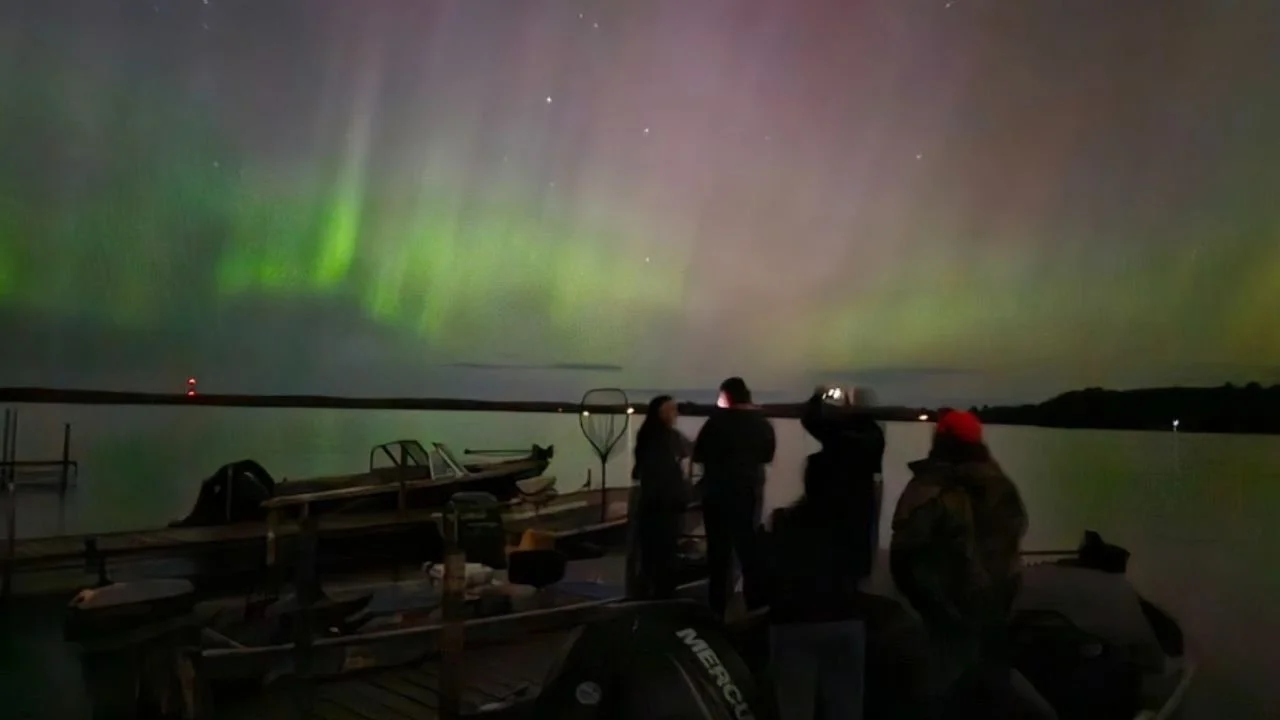
Seeing the northern lights takes the right sky, the right timing, and a little patience. Minnesota checks every box, and Ely sits at the heart of it. Timber Trail Lodge puts you on Farm Lake, minutes from the Boundary Waters. It gives you a comfortable cabin waiting after your night under the stars. Book your stay, pack a warm layer, and give the sky a chance to put on a show.
FAQs
What Time Can You See the Northern Lights in Minnesota Tonight?
The Northern Lights can appear anytime after dark. In Minnesota, viewing chances are often strongest between 10 PM and 2 AM. Activity can peak near midnight, but timing varies with solar activity, cloud cover, and local viewing conditions.
Why Can't We Whistle at the Northern Lights?
Some Northern cultures have traditional beliefs about whistling at the Northern Lights. In some stories, whistling may attract or anger the spirits. However, there is no scientific evidence that whistling affects the aurora or changes its behavior in any way.
How Do Northern Lights Affect Humans?
The Northern Lights do not normally harm people on the ground. The radiation involved is absorbed high in the atmosphere. Strong solar storms can affect satellites, radio signals, and power systems, but they do not directly cause health problems for people watching the aurora.
