
The Best Time to See the Aurora Borealis in Minnesota: Month-by-Month Guide
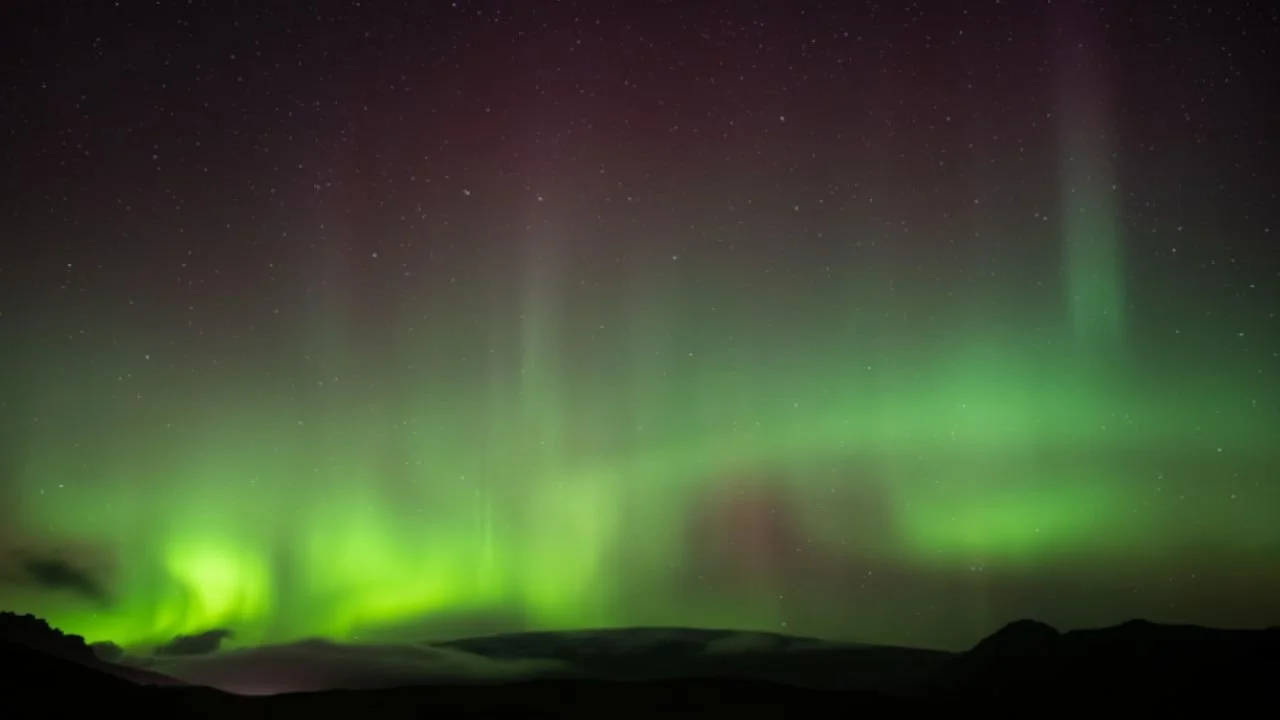
Timing changes everything with the aurora. Show up in June, and you'll wait in near-daylight for nothing. Show up in March, and the sky might reward you within an hour. Minnesota sees the northern lights every month of the year. But some months give you a real shot, while in others you might not see anything! Let’s find out what to expect, month by month, through 2026.
Why 2026 Favors March, April, September, and October
March, April, September, and October combine two things aurora hunters need most. First, they sit near the spring and fall equinoxes, when geomagnetic activity tends to spike. Second, they still offer enough hours of darkness to catch a display. That balance is rare. Deep winter has darkness but often buries the sky in clouds. Summer has clear air but almost no darkness at all. These shoulder months split the difference, and that's exactly why they lead our list. Peak viewing hours generally fall between 10 p.m. and 2 a.m. local time, no matter the season.
Month-by-Month Breakdown for 2026
January
January nights run long. Darkness can stretch past 14 hours in northern Minnesota. On paper, that sounds ideal. In practice, deep winter often brings thick cloud cover across the region. Add in temperatures that regularly drop below zero, and your viewing window shrinks fast. If you do go out, dress heavier than you think you need. A clear January night can still deliver a strong show.
February
February holds onto winter's cold but often clears up more than January. Crisp, dry air can produce some genuinely beautiful nights. Cold fronts tend to sweep clouds out of the way. Temperatures stay firmly in the deep-freeze range, though, so this month still demands serious cold-weather gear.
March
The spring equinox lands around March 20. Around that date, Earth's magnetic field lines up in a way that tends to boost geomagnetic storms. At the same time, Minnesota's brutal winter weather starts to ease. You get stronger solar activity paired with milder, clearer nights. The month offers this rare exact combination.
April
Early and mid-April carry the equinox momentum forward. Nights are still long enough to give you a real viewing window. This is especially so in the first half of the month. Solar activity tends to stay elevated during this stretch. Daylight grows quickly through April, so your dark hours shrink fast as the month goes on. Plan an early-April trip if you want to catch this window at its best.
May and June
Skip these months if the aurora is your main goal. Northern Minnesota's nights turn short and bright fast. Twilight lingers well into the evening, and true darkness barely arrives before dawn creeps back in. Even a strong solar storm has little dark sky to work with here.
July and August
Summer nights stay short and washed with light. Faint auroras simply don't stand a chance against a sky that never gets fully dark. A massive geomagnetic storm can occasionally punch through, but you shouldn't plan a trip around that chance. Better to enjoy summer for its lakes and trails. Save aurora hunting for another season.
September
September marks a turning point. The autumn equinox falls around September 23, triggering the same magnetic alignment that makes March so strong. Nights start getting genuinely dark again. The weather is milder than what October and November bring. This combination of rising solar activity and comfortable conditions makes September a standout month.
October
October might be the single best month for consistency. Nights grow noticeably longer. Skies tend to stay clearer than in the following months. It is the time before heavier lake-effect weather rolls in. Solar activity from the equinox often lingers into early October as well. Pack for cold, but expect good odds.
November and December
Darkness returns in force during these months. Some nights stretch past 15 hours of dark sky. That should make for great viewing, and sometimes it does. But northern Minnesota sees frequent cloud cover this time of year. It is driven partly by lake-effect weather patterns off the Great Lakes. Clear nights do happen. You just need more patience to catch one.
What Is the Best Way to Take a Photo of the Northern Lights?

A good aurora photo starts with the right gear. These tips will help you.
Set your camera to manual mode and shoot in RAW format.
Use the widest aperture your lens allows, ideally f/1.4 to f/2.8.
Set your ISO between 1600 and 3200, adjusting higher if the lights look faint.
Keep shutter speed short, somewhere between two and ten seconds. A fast-moving aurora usually blurs aurora into a shapeless blob if the shutter is open too long.
Switch off autofocus. Manually focus on a distant light, or set your lens to infinity.
Turn off flash, image stabilization, and any noise reduction settings that slow down your shots.
If you're shooting on a smartphone, switch to night mode. Mount it on something stable, and manually lock the focus before the lights appear.
Composition matters just as much as settings. A plain sky, however colorful, rarely makes a striking photo on its own. Add a tree line, a dock, or a cabin silhouette to the frame. This backdrop turns a nice picture into a memorable one.
Do the Northern Lights Have a Sound?
People have reported hearing the aurora for generations, long before anyone could explain why. The claims usually describe faint crackling, hissing, or popping noises during an active display. For years, scientists dismissed these reports as folklore or imagination.
Recent research suggests otherwise. Acoustics researcher Unto Laine has spent decades recording these sounds in Finland. His theory points to a layer of warm air sitting close to the ground, not the aurora itself, as the real source. During a geomagnetic storm, charged particles build up at this layer and discharge. This creates the crackling sound people hear. The lights and the sound may happen simultaneously, without one directly causing the other.
This research is still fairly new. It hasn't been fully accepted across the scientific community. Some experts remain skeptical. Either way, if you're out on a still, cold night and catch a faint crackle overhead, you won't be imagining it. You'll be hearing a phenomenon scientists are only beginning to understand.
What to Pack for a Night of Aurora Watching
Standing outside for hours in a Minnesota winter takes real preparation. Here’s what to pay attention to:
Start with a moisture-wicking base layer, add fleece or down for insulation. Finish with a windproof outer shell.
Insulated boots are non-negotiable.
Bring thick gloves, a warm hat, and hand warmers if you have them.
A thermos of something hot helps you withstand the time.
Bring a headlamp with a red-light setting, so you don't ruin your night vision when you check your gear.
A blanket or camp chair to make the waiting more comfortable.
Then there's the question of where you retreat to once the show winds down. This is where staying near Ely puts you ahead.
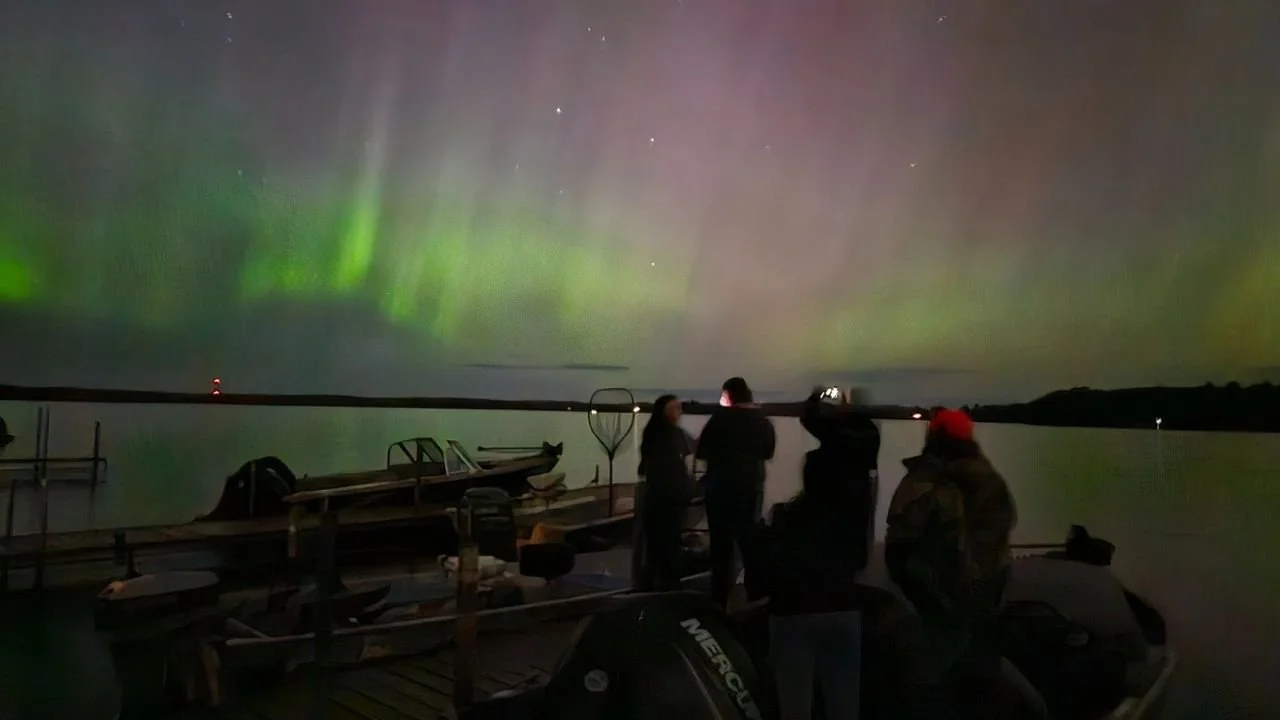
Waters just beyond it. Instead of packing a tent and hauling gear miles into the backcountry, you can step outside your cabin and watch the sky over the lake. Then, you can walk back into a warm, heated space the moment the cold becomes unbearable.
Experience the Magic of the Aurora in Ely
Minnesota's northern lights don't run on a fixed schedule. But the calendar still gives you an edge. March, April, September, and October offer your strongest odds this year. They are backed by both the equinox effect and workable night temperatures. Whichever month you choose, Ely puts you close to genuinely dark skies, with Timber Trail Lodge as your comfortable home base on Farm Lake.
FAQs
Where Will the Northern Lights Be Visible in Minnesota?
Look for the northern lights in remote parts of Minnesota with little light pollution. Good viewing spots include the Boundary Waters, Voyageurs National Park, Gunflint Trail, and Lake of the Woods. Choose areas with clear views toward the northern horizon.
Can You See the Aurora With the Naked Eye?
Yes, you can see the aurora without special equipment. Faint displays may look like moving gray or white clouds. Stronger displays can show bright green, pink, or purple waves dancing across the night sky.
What Is the Rarest Aurora Color?
Deep blue and pure deep red are among the rarest aurora colors. Blue can appear during intense storms at low altitudes. Red forms higher in the atmosphere. Pink and yellow displays are also extremely uncommon.
