
Walleye Fishing on Farm Lake Ely MN: Best Spots & Tips
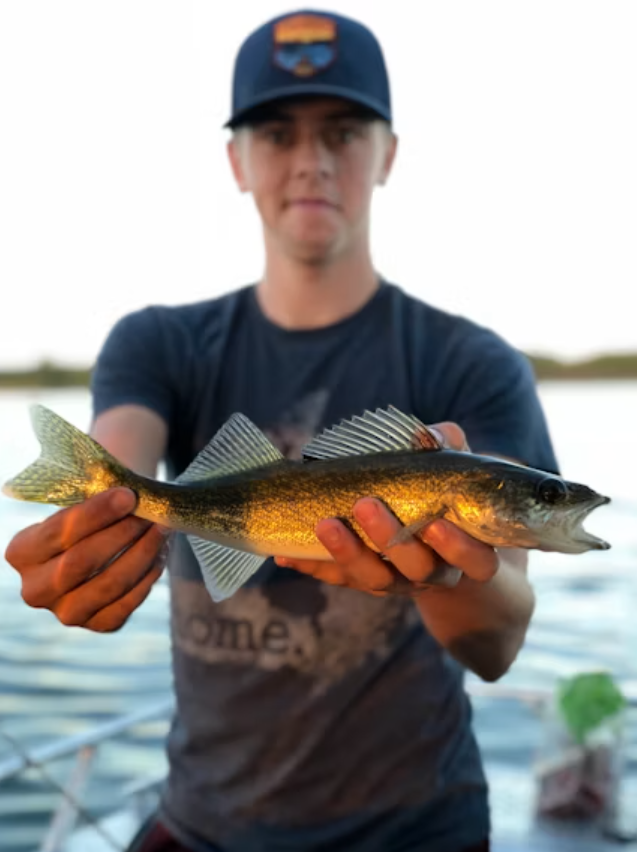
Walleye fishing on Farm Lake Ely MN works best when anglers follow simple lake patterns, pay attention to light, and understand how wind and structure move fish.
Farm Lake sits near Ely, Minnesota, on the edge of the Boundary Waters experience. It is part of the White Iron Chain of Lakes and connects toward South Farm Lake and the North Branch Kawishiwi River.
For guests staying at Timber Trail Lodge, that means walleye water is right outside the cabin. You do not need a long drive to start fishing. You can watch the morning light, check the wind, and be on the water during the best bite windows.
Farm Lake is not a mystery lake. Like many northern Minnesota lakes, it rewards anglers who slow down and read what the water is telling them.
This guide breaks down where and how to fish walleye on Farm Lake.
Best Spots for Walleye Fishing on Farm Lake Ely MN
Good walleye spots on Farm Lake near Ely include rocky points, drop-offs, underwater humps, narrows, and moving-water areas.
The best places usually have two things in common:
They give walleye access to food.
They give walleye quick access to deeper water or cover.
That is why structure matters so much. Walleye often hold near edges where shallow water drops into deeper water, rock changes to softer bottom, or current pulls baitfish through a channel.
These spots below stay useful through much of the fishing season.
Top Structural Targets
Current and Channel Areas
Farm Lake connects with nearby waters in the White Iron Chain and toward BWCA-connected routes, including South Farm and the North Branch Kawishiwi River.
Where water moves, baitfish often move too. Walleye use those current edges and channel areas to feed.
Look for:
Narrows
Channel edges
Current seams
Bends and pinch points
Places where calm water meets moving water
These areas can be especially useful early and late in the day, or when wind pushes water and bait into a predictable line.
If you plan to travel into BWCA-connected water, remember that fishing regulations, BWCA entry permits, and motor rules may change depending on your route.
Submerged Points
Long rocky points that drop into deeper water are classic walleye structure.
These areas are especially useful during low light. Early morning, evening, cloudy days, and windblown conditions can all bring fish closer to the top or edge of the structure.
A good point gives walleye options. They can slide shallow to feed, then drop back into deeper water when the sun gets high.
How to fish it:
Start shallow during low light.
Work slowly down the break.
Try jigs, slip bobbers, or crankbaits along the edge.
If you catch one fish, slow down and work the area carefully.
Walleye often use the same kind of structure across the lake. Once you find one productive point, look for similar areas nearby.
Rock Humps
Mid-lake rock humps attract baitfish and give walleye a place to feed.
These areas can be productive in summer when fish move away from shallow shorelines and hold closer to deeper structure.
Try anchoring or spot-locking near the edge of the hump and casting back across it. The top, the edge, and the first drop into deeper water are all worth checking.
Good presentations include:
Jigs with leeches or minnows
Slip bobbers set just above bottom
Crawler harnesses near the edge
Crankbaits that tick rock or run just above structure
Morning and evening often bring the best bite windows. On cloudy or windy days, fish may stay active longer.
Seasonal Fishing Tactics
Walleye behavior changes through the year. The basic rule is simple: fish follow comfort, food, and light.
On Farm Lake, that means location and depth shift as water warms, weeds grow, baitfish move, and daylight patterns change.
Early Summer
In late spring and early summer, walleye often stay closer to shore and near early-season feeding areas.
Windblown banks, shallow rocks, new weed growth, narrows, and nearby drop-offs can all be strong spots.
Target water roughly 6 to 12 feet deep when conditions are right. In low light, walleye may move even shallower.
Good early-season tactics include:
1/8- to 1/4-ounce jigs
Fathead minnows
Leeches as water warms
Slow trolling or drifting
Slip bobbers near structure
Cold water usually calls for slower movement. Let the bait look natural.
Mid to Late Summer
As water warms, walleye often move deeper during bright daylight.
Focus on:
Offshore rocks
Deep humps
Main-lake drop-offs
Weed edges near deeper water
Edges of flats
Many fish may hold in 15 to 30 feet of water, depending on light, oxygen, forage, and conditions.
During hot, bright days, slow presentations can work best. Early morning, evening, cloudy skies, and wind can extend the bite.
Good summer tactics include:
Bottom bouncers with crawler harnesses
Slip bobbers on deeper structure
Jigs worked slowly near bottom
Trolling crankbaits along breaklines
Local Fishing Rules
Farm Lake is part of the White Iron Chain of Lakes and the Kawishiwi River system. It also connects toward BWCA waters, so rules matter.
Key rules to know:
All walleye from 17 to 26 inches must be released immediately.
Only one walleye over 26 inches may be kept in possession.
This Farm Lake rule also includes the North Branch Kawishiwi River from Farm Lake east to the long portage.
Garden Lake, South Farm Lake, and White Iron Lake also have special walleye regulations.
Always check current Minnesota DNR fishing rules before your trip.
If your route enters the Boundary Waters Canoe Area Wilderness, you may also need a BWCA permit. A Minnesota fishing license does not replace BWCA entry permits or motor permits.
Best Time for Walleye Fishing on Farm Lake by Season
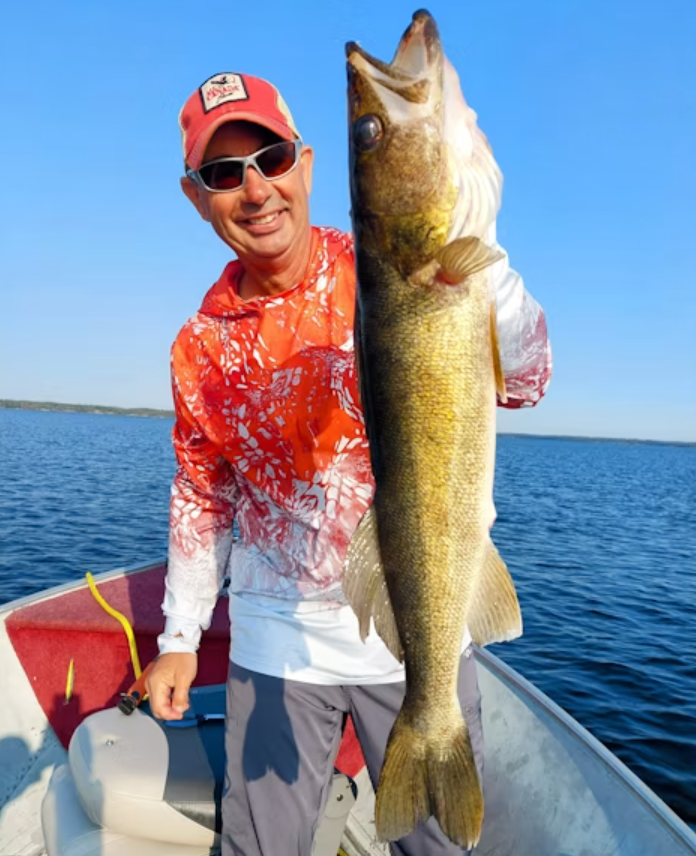
The best time for walleye fishing on Farm Lake near Ely, MN is often mid-May through June.
For inland Minnesota waters, the 2026 walleye and sauger season opened May 9, 2026, and runs through February 28, 2027.
Another strong period is September through October, when fish feed heavily before winter.
Dawn and dusk are usually the best daily windows. These low-light periods are when walleye are most likely to move shallower and feed.
Below are more details for walleye fishing by season.
1. Spring and Early Summer: Mid-May Through June
The Pattern
Minnesota walleye season opens in May. After spawning, fish are hungry and active but can still be affected by cold water, wind, and changing weather.
In this period, walleye often stay near shallow structure and transition areas. Depths may range from 3 to 12 feet depending on conditions.
Where to Fish
Focus on areas that warm first or concentrate bait.
Good spots include:
Shallow bays
Rocky shorelines
River and channel areas
Lake openings and narrows
Sand or gravel near deeper water
Windblown points
Tactics
Use light jigs in the 1/8- to 1/4-ounce range. Add a fathead minnow early, then shift to leeches or crawlers as the water warms.
Move slowly. Cast, drift, or troll at a controlled pace. In cold water, walleye often do not want to chase fast bait.
2. Summer: July Through August
The Pattern
Summer pushes many walleye deeper during bright daylight.
They may still feed shallow in low light, but during the day they often relate to deeper rocks, humps, weed edges, and drop-offs.
Where to Fish
Look for:
Main-lake drop-offs
Rock humps
Offshore reefs
Weed edges near deeper water
Transitions from rock to softer bottom
Depths of 15 to 25 feet are common, but fish can move shallower or deeper depending on conditions.
Tactics
Use bottom bouncers with spinner rigs and nightcrawlers. Deep-diving crankbaits can also catch fish when walleye are spread out.
Fish early morning or late evening for the best chance at shallow or active fish. Cloudy, windy days can extend the bite.
3. Fall: September Through October
The Pattern
Fall is one of the best seasons for larger walleye.
As water cools, fish feed heavily before winter. They often gather near deeper structure, current areas, and places where baitfish concentrate.
Where to Fish
Focus on:
Drop-offs
Points
Remaining green weed edges
Deeper rock structure
Channel areas
Edges near deep water
Depths of 20 to 30 feet can be productive, but conditions always matter.
Tactics
Use larger bait when fish are feeding heavily. Bigger minnows, chubs, and heavier jigs can be effective in deeper water.
Jigging spoons, slow trolling, and live bait rigs can also work well.
In fall, slow and deliberate often beats fast and flashy.
4. Winter: December Through February
The Pattern
Ice fishing can be strong in early winter. Walleye are often more active under early ice, then may slow down and move deeper as winter progresses.
Low-light windows still matter. Early morning and evening are usually better than midday.
Where to Fish
Early in the ice season, focus on:
Shoreline breaks
Rock points
Weed edges
Nearby drop-offs
In mid and late winter, look deeper:
Mud flats
Deep points
Channel edges
Basin transitions
Tactics
Use jigging spoons tipped with a minnow head. Dead-sticking a live minnow nearby can also work well.
Wax worms are more commonly used for panfish, perch, or mixed-bag fishing, but walleye usually respond better to minnows, minnow heads, and larger-profile presentations.
Simple Daily Rule
Walleye feed most actively in low light.
Early morning and evening are the golden hours.
On cloudy or windy days, fish may stay active longer, creating better daytime fishing opportunities.
Techniques That Work for Walleye Fishing on Farm Lake Ely MN
Walleye fishing on Farm Lake responds well to a few proven techniques. You do not need to overcomplicate it.
The three most useful approaches are:
Slip bobber fishing
Jigging and trolling
Crankbait fishing
Each one has a place depending on season, depth, wind, and how active the fish are.
Slip Bobber Fishing
Slip bobber fishing keeps live bait at a set depth. This helps reach fish holding near structure without dragging bait too fast.
It works well on Farm Lake because you can use it around points, humps, weed edges, narrows, and rock transitions.
It is also a good method for families because it is visual. Everyone can watch the bobber.
Slip Bobber Rig Setup
Bobber Stop and Bead
Start with a small thread stop on your main line. This controls how deep your bait will go.
Add a small bead under it. The bead helps the stop work cleanly with the bobber.
The Bobber
Use a slim pencil-style slip bobber. Balsa wood styles work well.
The slim shape matters because it creates less resistance when a fish pulls it under. It also makes light bites easier to notice.
Weight Setup
Add a small weight below the bobber. A split shot, small egg sinker, or light jig can work.
The goal is to keep the bait down without making the setup feel heavy or unnatural.
Hook and Leader
Tie on a fluorocarbon leader about 18 to 24 inches long. Use 6- to 8-pound test line for a stealthier presentation.
A #2 or #4 hook works well for leeches, minnows, or pieces of nightcrawler.
How to Fish Slip Bobbers on Farm Lake
Step 1: Find the Fish
Use sonar if available. Look near drop-offs, humps, rocky points, weeds, and current edges.
If you do not have sonar, use the map and the shoreline. Points, narrows, and windblown edges are good places to start.
Step 2: Set the Depth
Adjust the bobber stop carefully.
Set your bait about 6 to 12 inches above bottom. This keeps it in the strike zone without dragging into snags.
Step 3: Choose the Bait
Live bait works well.
Try:
Leeches for steady movement
Nightcrawlers for scent and action
Small minnows for active fish
Hook bait gently so it moves naturally.
Step 4: Cast and Wait
Cast smoothly into the target area. Let the bobber settle without too much tension.
Allow wind or current to move the bait slowly.
Watch closely. A slow dip, sideways pull, or sudden disappearance often means a bite.
Jigging and Trolling
Jigging and trolling are two of the most reliable ways to catch walleye on Farm Lake near Ely, MN.
Jigging helps you work tight structure. Trolling helps you cover water when fish are spread out.
Jigging for Walleye
Jigging is simple, but it takes feel.
It works best when fish stay near bottom around rocks, drop-offs, humps, and transition zones.
Setup
Use a light spinning rod around 6 to 6.5 feet long. A sensitive rod helps you feel small bites.
Use 6- to 10-pound braid with a fluorocarbon leader, or use light monofilament if you prefer a simpler setup.
How to Jig
Drop your jig until it touches bottom.
Lift the rod tip slowly by 1 to 2 feet, then let the jig fall back naturally.
Do not rush the movement. Many bites happen on the fall or right when the jig reaches bottom.
Watch for small taps, slack line, or a feeling of extra weight.
Best Baits
Use a jig head between 1/8 and 1/4 ounce for many situations. Go heavier when wind, depth, or current requires it.
Good bait options include:
Leeches
Nightcrawlers
Fathead minnows
Trolling for Walleye
Trolling helps cover more water in less time. It works well over flats, weed edges, and breaklines.
Setup
Use a medium-action trolling rod. A line-counter reel can help repeat productive depths.
Some anglers use snap weights, lead-core line, or bottom bouncers to keep bait near the fish.
How to Troll
Move slowly and steadily, often around 1.0 to 1.8 mph for live-bait rigs or crawler harnesses.
For crankbaits, slightly faster speeds can work.
The goal is to keep the lure near bottom or just above the structure.
Walleye often rise to strike from below. Keeping the bait close to the right depth increases your chances.
Best Baits
Crankbaits work well for trolling. Choose models that match local forage such as perch, shiners, or other baitfish.
Shad Rap and Flicker Shad-style lures are good examples.
Bottom bouncers with crawler harnesses also work because they keep live bait just above rocks and reduce some snags.
Catching Walleye on Farm Lake Near Ely, MN With Crankbaits
Catching walleye on Farm Lake near Ely, MN with crankbaits is about finding structure and triggering reaction strikes.
Two methods work especially well:
Trolling for open-water or breakline fish
Casting shallow structure during low light
Trolling for Suspended or Spread-Out Walleye
The Method
Trolling helps cover large parts of Farm Lake in less time. It works best when fish are scattered, holding along breaklines, or feeding across a broader area.
This method is useful when you need to find active fish.
Speed and Control
Keep boat speed controlled. A range of 1.5 to 2.5 mph is common for crankbaits, depending on lure, depth, and fish activity.
Small speed changes during turns can trigger bites. Fish often strike when the lure speeds up, slows down, or changes direction.
Depth Control
Let out enough line so the crankbait runs at the right depth.
It should run just above the fish, tick bottom occasionally, or skim over weed tops depending on the spot.
If fish are deeper, use snap weights, lead-core line, or other depth-control tools.
Casting Shallow Reefs and Shorelines
The Method
Casting works best around shallow structure.
Focus on:
Rocky points
Reefs
Windblown shorelines
Weed edges
Narrows
Low-light areas
Early morning and evening are strongest. Windy or cloudy conditions can also improve the bite.
Retrieve Style
Do not rely only on a steady retrieve.
Walleye often respond to changes in speed and action.
Try:
Twitch and pause
Slow retrieve with short snaps
Lift the rod tip and let the lure stall
Bump rock lightly, then pause
That uneven movement can make the bait look injured, which triggers strikes.
Best Lures and Colors
Lure Choices
Use crankbaits that match local baitfish.
Good options include:
Rapala Shad Rap
Berkley Flicker Shad
Husky Jerk-style minnow baits
Other shallow and mid-depth crankbaits
Color Choices
Farm Lake has tea-stained water, so visibility matters.
Good colors include:
Perch patterns
Gold
Orange
Chartreuse
Fire-tiger
Silver and black in clearer conditions
Natural colors can work well in clear water or bright sun. Brighter colors and flash can help when the water is stained, windy, or cloudy.
Mistakes to Avoid While Walleye Fishing on Farm Lake Ely MN
Many anglers struggle not because fish are missing, but because basic habits are off.
Fixing these issues can quickly improve results.
Ignoring the Tea-Stained Water
Farm Lake has a tea-stained appearance because of wetlands in the watershed.
That does not mean the lake is dirty. It means the water has a darker Northwoods color, and visibility can be lower than on clear lakes.
Many anglers make the mistake of fishing too subtle.
Use baits with contrast, flash, vibration, or a clear profile.
Good colors often include:
Gold
Orange
Chartreuse
Fire-tiger
Perch patterns
Ultra-thin, invisible setups are not always necessary here. Focus more on action, visibility, and fishing the right depth.
Misreading BWCA Boundaries
Farm Lake connects toward South Farm Lake and the North Branch Kawishiwi River, both of which are part of the BWCAW route conversation.
Farm Lake itself is not the same as entering the BWCA. But once you move into BWCA-connected waters, permit rules, motor rules, and wilderness regulations may apply.
This is one of the most important planning points for guests.
Before heading out, know:
Where you are going
Whether the route enters the BWCAW
Whether you need a self-issued or quota permit
Whether motor use is allowed on your route
What horsepower limits apply
When in doubt, ask before you launch.
Fishing Too High or Too Fast
Walleye often stay close to bottom.
One of the most common mistakes is fishing too high in the water column or moving bait too quickly.
Let your jig reach bottom first. Then lift it slowly and let it fall.
With crankbaits or trolling rigs, control depth carefully. Running a lure over the top of the fish is fine. Running it far above them all day may not work.
Moving Too Much or Staying Too Long
Some anglers leave a spot too quickly. Others stay too long in empty water.
Both approaches can hurt success.
A simple rule helps:
If no fish bite in 20 to 30 minutes, adjust.
That might mean changing depth, changing bait, shifting to nearby structure, or moving to a similar spot somewhere else.
But do not move randomly.
If fish should be on windblown points, try another windblown point. If they are on deep humps, move to the next hump. Stay in the pattern while searching.
Not Matching Bait to the Season
Fish behavior changes through the year. Bait choice should change too.
In early season, smaller bait can work well. Try minnows, leeches, or half nightcrawlers.
As water warms and fish spread out, crawler harnesses, crankbaits, and deeper presentations can become more useful.
In fall, bigger minnows or larger profiles can help when walleye feed heavily before winter.
Match what fish are naturally eating, and your odds improve.
Staying Near Farm Lake for Better Access
Walleye fishing on Farm Lake Ely MN becomes easier when you stay close to the water.
Lodging near the lake allows early starts and late evening fishing. Those low-light windows matter.
Timber Trail Lodge sits on Farm Lake in the Ely area and offers direct access to the lake chain. That helps anglers reach fishing spots faster each day.
Many visitors underestimate drive time to launch points. That extra time often costs the best bite window.
Being close to the lake means:
Less travel
More water time
Easier morning starts
More evening fishing
Simpler breaks for lunch or weather
Better flexibility when the wind changes
For families and casual anglers, that convenience matters.
For serious walleye anglers, it can make a real difference.
Final Thought
Walleye fishing on Farm Lake Ely MN is less about chasing fish and more about understanding water behavior.
Every trip teaches something new about timing, structure, light, wind, and patience.
Sometimes the best catch comes when the lake finally starts to make sense.
FAQs
What is the best bait for walleye in Minnesota?
Live bait is one of the top choices for walleye in Minnesota. Minnows, leeches, and nightcrawlers all produce good results throughout the season. In spring, many anglers prefer minnows. As the water warms, leeches and crawlers become popular. Soft plastics and crankbaits also work well when fish are actively feeding.
What is the best month to fish for walleye?
Many anglers consider May and June two of the best months for walleye fishing. Fish are active after spawning and often stay closer to shallow structure. September and October are also excellent because walleye feed heavily before winter and can produce larger fish.
What is the best lake in Minnesota for walleye fishing?
Minnesota has many outstanding walleye lakes, so there is no single best choice. Popular destinations include Lake of the Woods, Mille Lacs Lake, Leech Lake, Upper Red Lake, and many lakes in the Ely area. Farm Lake is a strong option for guests who want accessible walleye fishing, beautiful scenery, and a cabin base close to the water.
How old is a 23-inch walleye?
A 23-inch walleye is often around 7 to 9 years old, though growth rates vary by lake, food supply, genetics, and water temperature. Fish in colder northern waters may grow more slowly than those in warmer or more fertile lakes. Length can provide a rough estimate, but exact age requires scientific methods.
What is the walleye slot limit on Farm Lake near Ely?
On Farm Lake, all walleye from 17 to 26 inches must be immediately released. Only one walleye over 26 inches may be kept in possession. This rule also includes the North Branch Kawishiwi River from Farm Lake east to the long portage. Always check current Minnesota DNR regulations before keeping fish.
Do I need a BWCA permit to fish Farm Lake?
You do not need a BWCA permit just to fish Farm Lake outside the wilderness boundary. But if your route enters the Boundary Waters Canoe Area Wilderness, such as toward South Farm Lake or the North Branch Kawishiwi River, a BWCA permit may be required. Motor rules and permit types depend on the route and season, so confirm your plan before heading out.
