
7 Critical BWCA Reservations Tips for Easy Planning
Getting your BWCA reservations right is the first big step to a smooth wilderness trip. If you want a day trip or an overnight paddle into the Boundary Waters Canoe Area Wilderness, you must understand how permits work and how to book them so you don’t miss out.
Here’s what really matters when planning your reservations.
1. Know When Permits Are Required and Why
Permits are always required to enter the BWCA wilderness. But when you must reserve them ahead of time depends on the season.
BWCA Permit Costs at a Glance
First-time visitors often ask: “How much does a BWCA permit actually cost?” Here’s the breakdown: Is this for day permits, overnight permits, or both? Please clarify
Fee Type: Adult Permit
Amount: $16
Notes: Required for anyone 18 and older
Fee Type: Child Permit
Amount: $8
Notes: Ages 17 and under
Fee Type: Deposit
Amount: $32
Notes: Refundable if canceled at least 2 days in advance
Fee Type: Reservation Fee
Amount: $6
Notes: Non-refundable, always applies
Quick tips:
The $32 deposit is returned if you cancel at least two days before your trip.
The $6 reservation fee is never refunded, even if you cancel early.
If you cancel on the entry date or one day before, you are charged the $32 deposit penalty.
May 1 – September 30 → You need a reservation permit for overnight trips and motorized day trips.
October 1 – April 30 → Self‑issued permits are used, and no reservation is needed.
This system helps keep the wilderness quiet and not too crowded. Groups are limited to preserve solitude and protect the land.
Without a permit during the summer season, you won’t be allowed to enter at your planned entry point.
2. Permits Go Live on a Specific Day Each Year
If you’re planning a summer BWCA trip, mark your calendar well in advance. Quota permits for the busy season are released at 9:00 a.m. Central Time on the last Wednesday in January. This is when the system opens for reservations, and entry points can fill within minutes.
To give yourself the best shot:
Create your Recreation.gov account early. Make sure your profile is complete with name, email, and payment info. Logging in at the last minute can cost you precious time.
Use a desktop, ideally Chrome. Mobile browsers can be slower or glitch during high traffic.
Prepare three entry point/date options. Popular spots like Moose Lake or Seagull Lake often book immediately. Having backup choices means you’re ready if your first pick fills up.
Bookmark the direct URL for the BWCA reservation page. This saves time navigating menus when the clock strikes 9 a.m.
A few extra tricks help too. Open your browser tabs a few minutes before launch and keep login credentials handy. Some paddlers even practice navigating the site beforehand so they can move quickly.
3. Multiple Permits and Group Limits
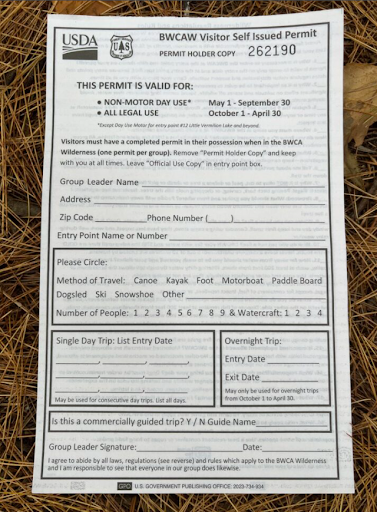
A BWCA permit is your route to your experience on the water. Each permit covers one group at one entry point on a specific date. This keeps traffic low and protects the delicate wilderness. Fewer boats and fewer people in one area means calmer lakes and less impact on wildlife.
Groups can include up to 9 people and 4 watercraft. But there are real-world reasons smaller groups often have a better experience. Groups of 4–6 people are easier to coordinate. They can move faster through portages, and create less noise at campsites. Larger groups can be fun, but coordinating multiple paddlers, gear, and meals can be a challenge. Permits for large groups fill faster.
It’s important to note that permit holders are limited to one permit per day. The Forest Service can cancel multiple same-day or consecutive reservations under the same name without notice. This rule exists to prevent hoarding and keep access fair for everyone. For families planning back-to-back trips, this means you need to stagger reservations across different names if you want to do consecutive days.
Permits are often held in a single cart, up to 7 at a time. Some people use it to stockpile. Knowing this allows you to plan responsibly and keep your trip legal. Ultimately, understanding group limits and permit rules shapes how enjoyable and stress-free your BWCA adventure will be.
Alternate Permit Holder Tip
A little-known but important detail: you can name alternate permit holders when booking, and this can save your trip if the primary holder can’t make it.
Alternates must be named during the initial reservation. You cannot add them later.
Only the named individuals can pick up the permit at the entry station. No exceptions.
This is especially useful for families or groups where schedules may change. Having a backup ensures someone can still claim your slot without losing the reservation.
4. Don’t Count on Last‑Minute Permits for Specific Spots
Eyeing a specific entry point on a certain date? Waiting until the last minute can feel risky, but it’s not hopeless. While peak-season spots do fill fast, there’s a mechanism that works in your favor: cancellations.
Cancelled permits are returned to the system and become available for resale within 24 hours.
In 2024, over 11,000 permits were cancelled, creating opportunities for flexible planners.
To increase your chances:
Check Recreation.gov regularly in the weeks leading up to your trip. A slot can appear unexpectedly.
Mid-week entry days are often less crowded and easier to snag than weekends.
Shoulder-season dates, like late May or early September, consistently have more openings.
Even if your first choice isn’t available, being flexible with entry points or nearby dates often allows you to secure a permit that fits your overall plan. With a little patience and regular checking, last-minute bookings can actually work out.
5. Pick Up Your Permit at the Right Place
Booking your permit is only the first step. You cannot enter the BWCA without picking it up at the station you selected during booking. Choose this issuing station carefully, because changing it later is not easy.
When you arrive to pick up your permit:
Photo ID is required for the permit holder or a named alternate. No one else can collect it.
Leave No Trace training is verified on-site. Parts 1 & 2 of the video must be completed beforehand. At pickup, Part 3 is shown, followed by a short quiz for all group members.
Timing matters. Some Forest Service offices have limited hours, so cooperator stations like lodges or outfitters are often more convenient.
For example, Timber Trail Lodge acts as a cooperator issuing station. Guests can pick up their permits without rushing, ask staff questions, and get guidance on entry points or timing. This makes the start of your BWCA adventure smooth and stress-free.
6. Cancellation Rules Matter
Life happens. Plans change, people get sick, or weather looks bad.
The BWCA reservation system allows cancellations, but fees and refunds are precise:
The $32 deposit is refundable if canceled at least two days before your entry date.
The $6 reservation fee is nonrefundable, no matter when you cancel.
Canceling on the entry date or one day before triggers a $32 penalty in addition to forfeiting the $6 reservation fee.
Releasing your permit back into the system on time helps someone else enjoy the BWCA and keeps access fair for all. Knowing the exact rules ensures you won’t face unexpected charges if plans change.
7. Use Local Help to Remove Friction — Especially If You’re New
The BWCA reservations process can feel overwhelming the first time you try it. Between quotas, entry points, and the Recreation.gov system, it’s easy to get stuck. Local help can make the difference between frustration and a smooth start.
For instance, imagine a guest calling Timber Trail Lodge three weeks before a trip. The staff walk them through available entry points near Farm Lake. This not only covers Farm Lake itself but also South Farm Lake and access to the North Kawishiwi River. They explain which dates tend to fill quickly. The guest learns how to navigate Recreation.gov to secure the right permit. They even clarify pickup logistics, including the photo ID and Leave No Trace video requirements.
This hands-on support can include:
Reviewing multiple entry point options to match your skill level and schedule
Explaining group limits, alternate permit holders, and daily permit rules
Printing permits on-site for those who have booked online ahead of time
Offering guidance on local timing, nearby lakes, and less crowded routes
Because Timber Trail Lodge is a cooperator permit issuing station, you can pick up your permit directly at the lodge. You can do it at hours more convenient to you than the Forest Service office.
Why BWCA Reservations Shape Your Adventure
Permits protect the wilderness, but they also shape your trip experience.
They force you to think about where you begin and when you start. They build anticipation. And they connect you with the rhythm of the BWCA itself.
Instead of seeing the reservation process as frustrating, it helps to see it as part of the adventure.
What’s more important: getting the permit you want, or getting the permit that lets you start your adventure on your terms?
